APPLICATION LANDSCAPE
One systems idea.Multiple physical realities.
Each frontier demands its own hardware, communications, safety case and route to commercialization. The common theme is purposeful coordination—not cosmetic repetition.
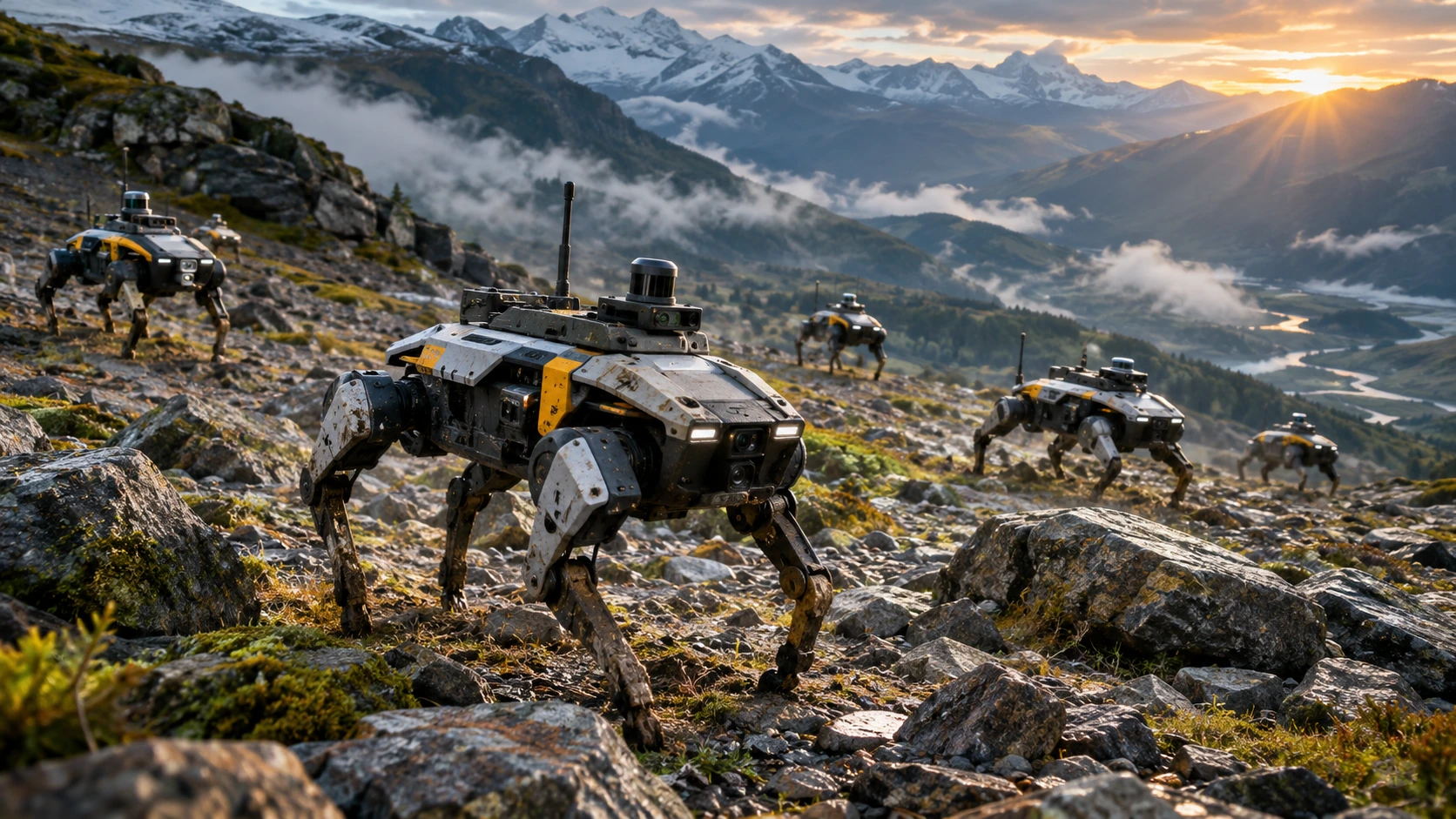
FIELD AUTONOMY
Intelligence across terrain.
Ground collectives can divide terrain coverage, relay useful observations and adapt assignments as conditions change. The technical challenge is not simply adding more robots: each unit needs reliable sensing, navigation, communications, recovery and clear rules for working alongside people.
Explore Land robotics ↗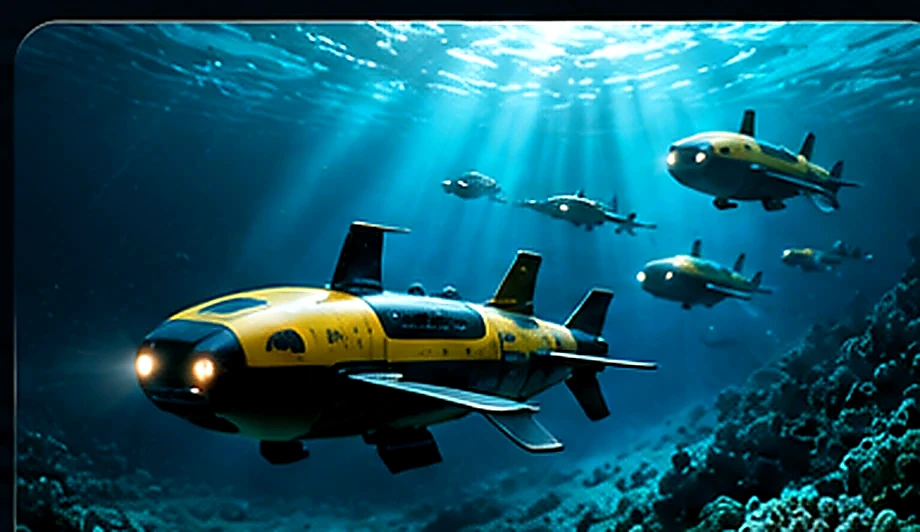
MARINE AUTONOMY
Coordination beneath the surface.
Unlike airborne robots, underwater systems cannot count on routine GPS reception or high-bandwidth radio links. Multi-vehicle observation may combine acoustic communication, onboard navigation, local sensing and scheduled data exchange to cover larger areas while limiting vessel support.
Explore Underwater systems ↗
MICRO & BIO-INSPIRED SYSTEMS
When scale changes everything.
Smaller robots open possibilities for low-disturbance inspection and tightly constrained spaces, but shrinking size also compresses the available room for power, sensors, communication and control. Many published systems demonstrate isolated devices or controlled groups—not practical autonomous micro-swarms.
Explore Miniature collectives ↗
INDUSTRIAL & FACILITY SYSTEMS
Many machines. One operating picture.
Factories, warehouses and large operating environments may combine autonomous mobile robots, stationary machines and sensing systems. The value comes from coordinated routing, handoffs, fault handling and human oversight—not from treating every industrial robot as a swarm.
Explore Industrial autonomy ↗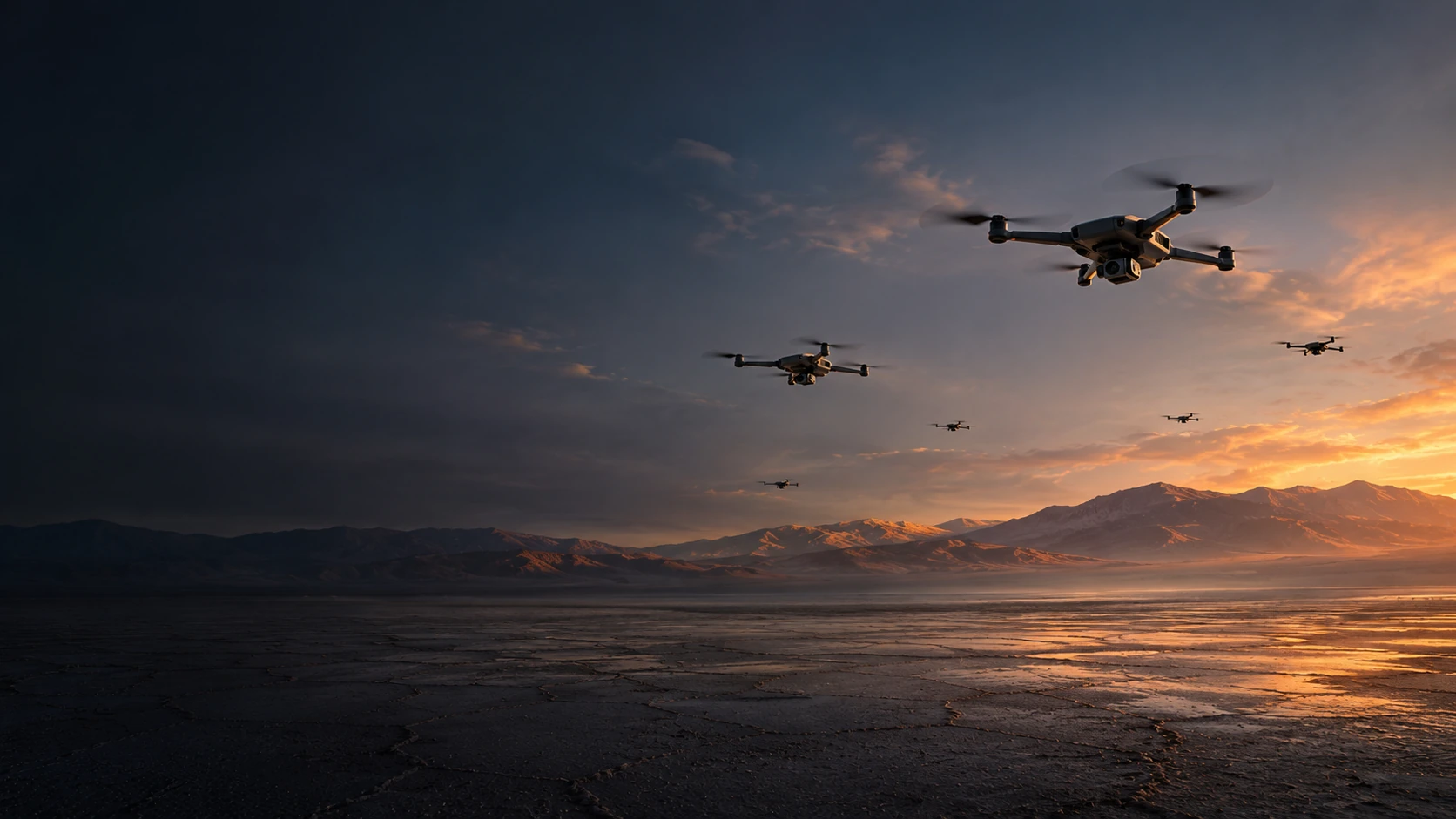
COORDINATED FLIGHT
More coverage. More responsibility.
Multiple aircraft can improve coverage and resilience when coordination is dependable. Flight swarms need mission planning, collision avoidance, airspace compliance, robust links and humans responsible for decisions—especially as aircraft numbers grow.
Explore Aerial collectives ↗
SOFTWARE COLLECTIVES
Coordination with no physical swarm.
The swarm metaphor also describes computational agents or edge devices carrying out related tasks. Unlike a physical robot collective, the hard problems may be observability, permissions, tool access, verification, coordination overhead and safe recovery when one agent fails.
Explore Digital agent systems ↗A BRAND FOR COORDINATED SYSTEMS
Beyond a single platform.
InvisibleSwarm.com is a premium domain offering for ventures building next-generation collectives across physical or digital environments.
Enquire about the name ↗